

Can a thermal camera find hidden water damage?
A thermal camera can help find areas worth checking, but it cannot prove that they are wet. It shows surface temperature differences. We investigate suspicious patterns with moisture-meter readings and observations before drawing conclusions about water damage.
How thermal imaging supports a water damage inspection
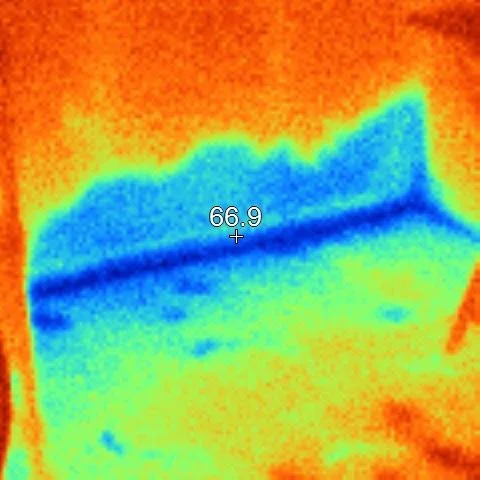
Look for temperature patterns, then confirm moisture
A thermal camera shows surface temperature differences. Those patterns can help identify areas that need closer inspection, but the camera does not see through walls or directly measure how wet a material is.
We use moisture meters to check suspected wet areas and compare readings with appropriate unaffected materials. The thermal image supports the inspection; it does not replace those readings or establish the cause on its own.
FLIR explains why suspected moisture needs confirmation with a moisture meter.

Thermal image showing surface temperature differences around a person’s feet during an inspection. Meter readings and other findings are needed to confirm moisture.
Tap a question · understand the inspection
What does that thermal image actually tell me?
Does a blue or cool-looking area mean it is wet?
No. Color represents the image’s temperature scale. A temperature difference is a clue to investigate, not a moisture measurement. The next step is to check the material with a suitable moisture meter and other observations.
Can the camera see water behind my wall?
It records surface temperature patterns; it does not see through the wall. Materials behind the wall may need closer inspection, and an area may need to be opened to check them directly.
Does a normal-looking image mean drying is finished?
No. To decide whether drying is finished, we need moisture readings and a drying target for the material being checked. See the interactive moisture-record example for what to ask before equipment leaves.
Use the findings to plan the next steps
Tell us when the leak started, where water appeared, and whether the source has been repaired. We check the wet areas we can reach and explain the water removal, drying and any closer inspection needed.
Insulation, airflow, sunlight, and other conditions can also create temperature differences. A suspicious pattern is a reason to investigate rather than proof that every area in the image is wet.
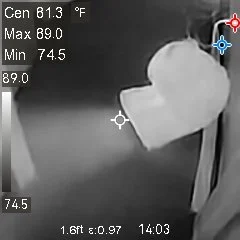
Heated Air Exchange
Thermal view of an air mover and surrounding surfaces during drying. Temperature patterns show part of the equipment setup; follow-up moisture readings show how the materials are drying.
Track drying with comparable readings
During drying, we repeat moisture readings to track progress and adjust equipment. A dry-looking surface or a thermal image changing color does not tell us, on its own, whether the material has met its drying target.
Photos and recorded readings provide a clearer account of the affected areas and the work performed. Read why a dry-looking floor can still have a wet subfloor, or see how observations and readings supported our Thorndale restoration project.
Request an inspection and written report
Learn about Rapid Dry’s moisture inspections and reports and water removal and structural drying. For an active water emergency, call (254) 218-3757; for a nonurgent concern, request an inspection.

Central Texas service coverage
Rapid Dry is based in Belton and serves nearby Central Texas communities. Find water restoration and cleaning services by city, or call with your address to arrange service.
